
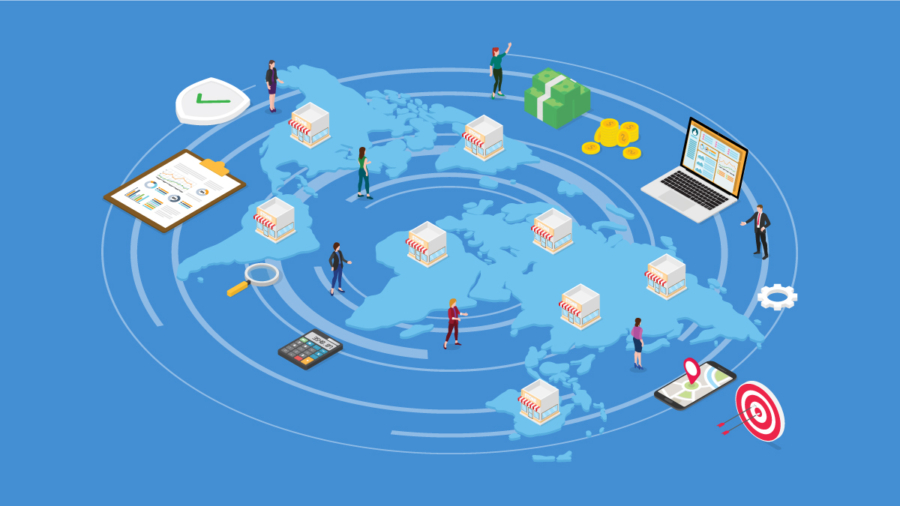
Why-Is-Democratization-of-the-Traditional-Distribution-Network-Essential

Why Is Democratization of the Traditional Distribution Network Essential?

The FMCG industry in India is one of the most vibrant sectors of the economy, catering to a rapidly growing consumer base. Yet, behind its dynamic growth lies a significant challenge: the inefficiencies and barriers within traditional distribution networks. General trade, which accounts for over 70% of FMCG sales in India, operates on a fragmented system where each brand is expected to create and manage its own distribution network. This monopolistic approach stifles competition, limits market access, and prevents the sector from reaching its full potential.

The Problem with Traditional Distribution Networks

Traditional FMCG distribution networks are highly siloed. Brands are required to independently scout, onboard, and manage distributors for every region they wish to operate in. This duplication of effort creates inefficiencies at multiple levels:

  1. High Costs for Brands: Each brand must invest heavily in finding and maintaining its own network, even if they are targeting the same markets as other brands.
  2. Limited Market Access: Small and regional brands often struggle to penetrate new territories due to the lack of established distribution networks.
  3. Lack of Collaboration: Distributors work with a few brands in isolation, missing opportunities to scale by collaborating with other businesses.

This system also creates regional imbalances. Larger, urban markets often receive the bulk of resources, leaving rural and underserved areas without access to the same variety of products.

The Case for Democratization

Democratizing the FMCG distribution network means creating a shared, transparent, and inclusive ecosystem where brands and distributors can collaborate instead of competing in silos. Here’s why it’s essential:

  1. Breaking Down Barriers: A democratized network allows small and medium-sized brands to compete on a level playing field with larger players. By sharing access to an existing distribution network, smaller brands can enter new markets without significant capital investments.
  2. Increasing Efficiency: When multiple brands utilize the same distribution network, redundancies in operations are eliminated. Distributors can optimize their resources by working with a diverse portfolio of brands, while brands save time and money on network building.
  3. Promoting Inclusivity: A democratized system ensures that even the most remote and underserved regions are included in the supply chain. Distributors specializing in local areas can connect with national and international brands, ensuring equitable access to products across the country.
  4. Fostering Innovation: Healthy competition and collaboration encourage stakeholders to innovate. Transparency and shared resources lead to better data-sharing practices, more efficient workflows, and the adoption of new technologies like AI and predictive analytics.

An Ecosystem of Collaboration

At the heart of democratization is the idea of collaboration over competition. By creating an open and shared network, manufacturers, distributors, and retailers can focus on their core strengths. Manufacturers concentrate on scaling production and brand-building, while distributors enhance their portfolios and operational efficiency.

The Path Forward

To truly democratize the distribution network, the industry must embrace technology and foster collaboration among stakeholders. Digital platforms that provide shared access to pre-vetted distributors, unified tools for managing operations, and transparent transaction systems are the key enablers of this transformation.

Democratization doesn’t just benefit individual businesses; it revitalizes the entire FMCG ecosystem. By reducing inefficiencies, improving inclusivity, and encouraging innovation, it paves the way for a more dynamic, equitable, and sustainable future for the industry.


What-Are-the-Key-Operational-Challenges-of-FMCG-Product-Distributors-

What Are the Key Operational Challenges of FMCG Product Distributors?

Behind every FMCG product on a store shelf lies a complex distribution network. Distributors are the unsung heroes, ensuring that goods are transported from manufacturers to retailers. Yet, their critical role comes with significant challenges that often go unnoticed. Let’s delve into the key operational hurdles faced by distributors in the FMCG sector.

The Struggle with Inventory Management

For distributors, maintaining optimal inventory levels is a perpetual challenge. Overstocking ties up working capital and risks product expiries, especially in categories like food and beverages. On the other hand, understocking leads to lost sales and dissatisfied retailers. Traditional inventory systems, often relying on manual updates, make it difficult to achieve balance. Modern digital platforms, however, offer real-time inventory tracking and demand forecasting to mitigate these issues.

Complexities of Order Fulfilment

Order fulfilment in the FMCG space isn’t just about delivering goods. It involves processing returns, managing promotional schemes, and adhering to delivery schedules. Manual processes slow down these operations, increasing the risk of errors and delays. For instance, a distributor managing multiple product lines might face logistical bottlenecks if their systems aren’t streamlined. Automation can eliminate these inefficiencies by ensuring accurate, timely order processing.

Conflict with Manufacturers

Distributors often find themselves at odds with manufacturers over issues like credit limits, delayed payments, and unfulfilled promotional promises. Manufacturers expect distributors to prioritize their brands, while distributors juggle competing demands from multiple clients. Without transparent communication channels and automated claim systems, these conflicts can escalate.

Navigating Regional Expansions

Expanding into new regions is fraught with challenges. Distributors must establish new relationships with retailers, adapt to local market demands, and manage logistics over greater distances. Without data-driven insights, entering a new market can be a high-risk endeavour. Digital transformation holds the key to overcoming these challenges. Platforms that integrate inventory management, order fulfilment, and analytics empower distributors to operate with precision and scale sustainably.

Why-Distributors-Who-Resist-Technology-Will-Become-Extinct

Why Distributors Who Resist Technology Will Become Extinct

Picture a bustling marketplace from a few decades ago: distributors taking orders on paper, manually tracking inventory in ledgers, and relying on phone calls to confirm shipments. Back then, these practices were the norm, and technology had little role to play. Fast forward to today, and the market has transformed dramatically. The age-old methods that worked in the past are now barriers to success in an increasingly digital world. In fact, a recent McKinsey study shows that over 50% of supply chain leaders view digital transformation as critical to their competitive advantage. Distributors who fail to adapt are on the brink of irrelevance.

The New Standard of Efficiency

In the fast-moving consumer goods (FMCG) sector, speed and precision are paramount. Inefficiencies such as manual inventory tracking, delayed order fulfilment, and poorly managed returns are no longer acceptable. According to a Deloitte report, companies leveraging supply chain automation see a 15-30% increase in operational efficiency and a 20% reduction in inventory carrying costs. These figures highlight the tangible benefits of embracing technology.

Digital platforms are now designed for streamline manufacturer and distributor onboarding, help both parties establish transparent and engaging operating models, reduce manual errors by enabling data-driven decisions, and optimize resource allocation. For example:

  • Forging the Right Partnerships: Digital platforms are vital for connecting manufacturers with like-minded distributors and vice versa. For example, Bizz+ enables manufacturers to identify distributors with complementary strengths, ensuring strategic alignment. These platforms accelerate the process of forming partnerships, which is crucial for staying competitive in today’s fast-paced market.
  • Real-Time Inventory Management: Advanced tools can track stock levels across multiple locations, enabling better replenishment strategies and reducing stockouts.
  • Automated Order Fulfillment: Systems equipped with AI and robotics can process orders faster and with greater accuracy.

In an era where consumers expect order fulfilment in under 10 minutes for daily essentials—and increasingly for a wider range of products—staying ahead requires agility and technological enablement. Companies like Zepto and Blinkit have already set new benchmarks for rapid delivery, raising the bar of supply chain across all sectors. The ability to match such expectations hinges on advanced digital tools and streamlined logistics.

This demand for rapid fulfilment hinges on tight collaboration between manufacturers and distributors, including super stockists, to ensure that product availability and delivery standards meet consumer expectations. By leveraging digital platforms, both manufacturers and distributors can strengthen these relationships, enhancing their operational readiness and market competitiveness.

Manufacturers are increasingly choosing technology-enabled distributors because they deliver on these efficiencies and even distributors are looking forward to collaborating with manufactures who rely on technology to identify evolving trends and shape their product placement and pricing accordingly. In contrast, traditional distributors struggle to compete, losing out on lucrative partnerships.

Meeting Changing Customer Expectations

Today’s retailers and manufacturers demand more than just product delivery; they seek actionable insights into sales trends, inventory levels, and regional market dynamics. A 2023 Gartner report highlights that 74% of supply chain leaders prioritize data-driven decision-making as a key differentiator.

Digital solutions allow manufacturers, super stockists, and distributors to:

  1. Provide Predictive Analytics: By analyzing sales patterns, they can anticipate future demand and avoid overstock or understock scenarios.
  2. Enhance Collaboration: Platforms with integrated dashboards facilitate seamless communication between manufacturers, super stockists and distributors.
  3. Deliver Superior Customer Experiences: Technology-enabled transparency fosters trust and strengthens relationships among stakeholders.

For example, manufacturers promoting the use of AI-driven ERP platforms like SAP’s Integrated Business Planning, Microsoft Dynamics 365, and BizOM which offer insights that traditional methods simply cannot. Manufacturers/super stockists/distributors who fail to adopt such tools risk alienating their partners.

The Cost of Inaction

While some manufacturers/super stockists/distributors hesitate due to perceived costs and complexity, the real expense lies in doing nothing. According to an EY report, businesses that delay digital adoption experience:

  • 40% slower revenue growth compared to their tech-savvy competitors.
  • 25% higher operational costs due to inefficiencies.

Competitors who embrace technology gain substantial advantages:

  • Expanded Market Reach: Digitally equipped manufacturers/distributors can scale operations and enter new markets with ease.
  • Improved Margins: Automation reduces overhead, while data-driven insights enhance profitability.
  • Increased Resilience: Technology enables faster adaptation to disruptions, such as those caused by the COVID-19 pandemic.

Consider this: a study by Bain & Company revealed that manufacturers/super stockists distributors leveraging technology to digitize processes saw revenue growth rates double compared to those who resisted change. The stakes couldn’t be clearer—adapt or face extinction.

Real-World Success Stories

  1. Mayora India’s Digital Leap: With Bizz+’s technology platform’s sales automation solutions, Mayora India saw a 700% increase in total productive calls over two years. The adoption of order management and dynamic dashboards enabled the company to achieve real-time inventory tracking and streamline its supply chain, boosting efficiency and transparency across operations.
  2. Global Confectionery Giant’s Transformation: A leading global confectionery brand leveraged Bizz+’s technology platform for end-to-end sales automation and distributor management systems to grow average order size by 113% and outlet reach by 37% in a single year. By utilizing data-driven insights, the company identified high-potential outlets, optimized their journey plans, and tailored promotions to enhance partner loyalty.
  3. World’s Largest Toothpaste Brand in Nepal: Operating in a challenging terrain, this brand used Bizz+’s technology platform capabilities SFA and DMS solutions to achieve a 94% increase in outlet fill rates and boost outlet visits by 12.3x. Real-time data access empowered the company to overcome inventory challenges, enabling seamless communication and enhanced visibility across its distribution network.

These examples demonstrate how digital tools can revolutionize distribution, delivering measurable improvements in efficiency, reach, and profitability.

Future-Proofing Through End-to-End Digitalization

Bizz+ offers the perfect solution to address these challenges and future-proof the distribution/supply chain network. Our platform delivers end-to-end digitalization by integrating tools for:

  • Accelerate discovery process: Bizz+ facilitates seamless onboarding, making it easier for distributors to expand their portfolio while minimizing upfront investments. As a result, both manufacturers and distributors can achieve vertical and horizontal growth effortlessly.
  • Inventory and Order Management: With real-time tracking and AI-driven demand forecasts, Bizz+ empowers distributors to minimize stockouts and overstock scenarios.
  • Customer Relationship Management (CRM): Our platform enhances collaboration and transparency between manufacturers and distributors, simplifying negotiation and engagement.
  • Performance Analytics: Leveraging transactional data, Bizz+ provides actionable insights, enabling distributors to optimize operations, forecast demand, and run targeted campaigns.

Moreover, Bizz+ is uniquely positioned to democratize the distribution network by connecting MSME manufacturers with distributors across India. Through our user-friendly platform, manufacturers can build a digital network rapidly, ensuring operational agility and scalability.

Conclusion: The Digital Imperative

Manufacturers/Super stockists/Distributors who resist technology face a harsh reality: obsolescence. However, with platforms like Bizz+, embracing digital transformation is no longer a daunting task. Bizz+ bridges the gap between traditional practices and modern efficiency, enabling stakeholders to thrive in today’s competitive landscape.

By adopting Bizz+, all the engaged parties gain access to a cutting-edge platform that offers transparency, scalability, and efficiency. Manufacturers benefit from a democratized distribution network, empowering them to compete with larger players. Together, we can usher in a new era of innovation and growth.

For decision-makers, the choice is clear. Partner with Bizz+ to ensure your distribution network not only survives but thrives in the digital age. The clock is ticking—embrace the future with Bizz+.

Click to schedule a 30-minute complimentary consultation call with our experts and learn how you can leverage Bizz+ to grow your business.